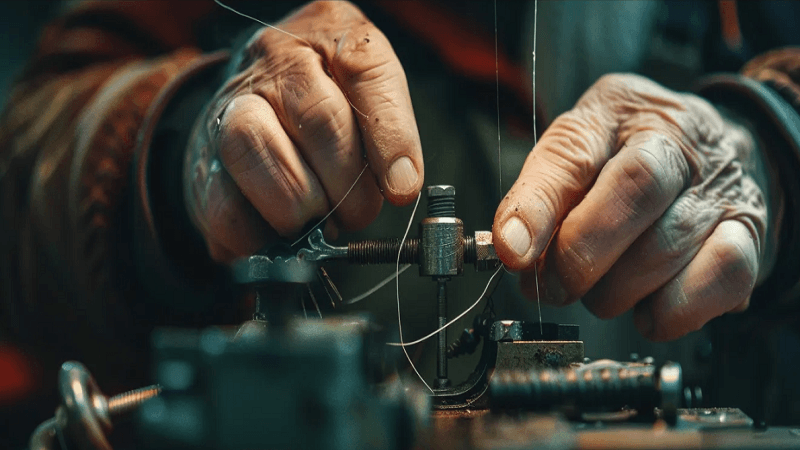
Fly fishing enthusiasts understand the crucial role that precise fly tying plays in a successful fishing expedition. A quality fly tying vise not only simplifies the process but significantly increases the accuracy of your flies, impacting your overall fishing efficiency.
Mastering the art of fly tying with the right tools can be transformative for any angler. In this article, we’ll explore how a fly tying vise enhances your technique, the core features of a high-quality vise, and how to select the best one for your fishing needs.
How a Fly Tying Vise Enhances Precision in Fly Fishing
Fly tying vise A fly tying vise offers stability and a secure grip, essential for working with small materials and intricate designs. This stability allows anglers to achieve higher precision in wrapping threads, applying feathers, or attaching hooks, directly translating to more effective fishing lures.
The controlled environment provided by a vise reduces errors and material wastage. An angler can repetitively create consistent designs, which is crucial for targeting specific fish species. This consistency ensures that each fly is optimally effective, eliminating the variability that often comes with hand-tying.
For newcomers, the learning curve in fly tying can be steep. Investing in a good fly tying vise helps simplify this process, providing clearer visibility and easier manipulation of materials, thus speeding up the learning process and enhancing skill acquisition.
Key Features of High-Quality Fly Tying Vises
A top-notch fly tying vise is characterized by its robust construction and versatility. Quality vises are typically made from durable materials like stainless steel or aircraft-grade aluminum, ensuring longevity and resistance to wear and tear.
Adjustability is another critical feature; a vise should accommodate various hook sizes and types. This flexibility allows anglers to switch between creating flies for freshwater trout and saltwater bonefish effortlessly. Furthermore, well-designed vises should offer smooth rotation, facilitating an all-angle access to the fly without compromising its grip stability.
When selecting a fly tying vise, it is essential to consider the type of base. A heavier base provides stability, whereas a clamp-style base can be attached to various surfaces for portability. For an in-depth look at the best models, consider viewing leading fishing gear reviews.
Comparing Fly Tying Without a Vise to Using One
Flying tying without a vise, while possible, presents numerous challenges, particularly in maintaining consistency and accuracy. Hand-tying flies can lead to uneven sizing and improper alignment of materials, which might reduce the fly’s effectiveness in attracting fish.
Using a vise, anglers can achieve uniformly sized flies with precise symmetry and alignment of materials, a key component in creating flies that move naturally in water. This precision helps simulate real insect behaviors more accurately, making the lure irresistible to fish.
Moreover, a vise can significantly decrease the time spent tying each fly. This efficiency allows for more time to be spent on the water, experimenting with different flies. This practical benefit cannot be understated for avid anglers looking to make the most out of their fishing sessions.
Selecting the Right Fly Tying Vise for Your Fishing Needs
Choosing the right fly tying vise depends heavily on the specific requirements of your fishing style and the species you target. Anglers focusing on smaller fish species might prefer a vise with finer control features, while those targeting larger species may require a vise with a stronger grip.
Additionally, consider the portability of the vise if you frequently travel. A compact, lightweight vise might be ideal. Also, assess the ease of assembly and disassembly as it can impact your overall experience, especially in outdoor settings.
Ultimately, consult with experienced anglers in your community or visit specialized stores. They can offer insights and recommendations based on practical knowledge that can help you make an informed choice. For more detailed advice, see a fishing gear guide.
Ultimately, the decision to invest in a fly tying vise can markedly improve your fly fishing success. By understanding how a vise enhances precision, what features to look for, and how to select the right model for your needs, you can elevate your fly fishing experience significantly.