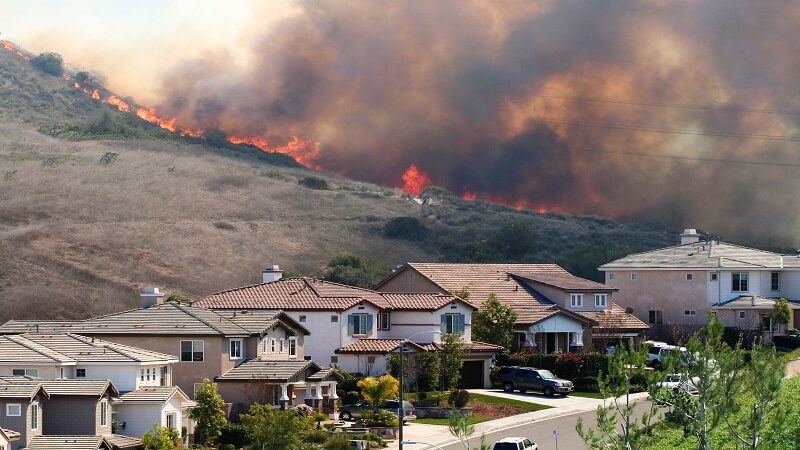
About 115 million Americans live in regions with an escalated wildfire risk—many of which are rural. But why are rural communities so vulnerable to fire emergencies? The main issue can be traced to a combination of environmental, logistical, and infrastructural challenges. If you live in a rural area, here’s what to know in order to protect yourself.
Why Fire Risks Are High in Rural Communities
There are several reasons as to why rural areas tend to face a heightened risk of fires. Let’s explore a few of the most common hazards to be aware of.
More Wildland Exposure
Rural homes are often near forests, grasslands, or crop fields. In drought seasons especially, this terrain provides natural fuel that can ignite a spark and accelerate rapidly into a blaze. As of recent estimates, nearly one third of all U.S. houses are in the urban-wildland interface where nature meets human development, and rural communities that lack the resources to keep dry brush from structures face an increased risk of these landscapes catching fire.
Longer Response Times
A delay in fire department response times is another major concern for rural areas. Sparse populations often mean fewer fire stations, most of which rely on volunteers. A fire that might be contained quickly in an urban area can accelerate out of control in a rural community that has to wait for a first response agency to arrive from the nearest city.
Limited Water Supply Access
Because fire hydrants might not be unavailable in urban areas, firefighters often have to use tanker trucks, which can slow down their suppression efforts. This limited access to water can also deter rural home or business owners from installing adequate fire sprinkler systems, which increases the chances of a blaze spreading out of control.
Old Structures or Heat Sources
Many rural structures have not been outfitted with basic fire safety equipment. To put this into context, 73 percent of residential fires in rural areas occurred in structures without operational smoke detectors. Older wooden structures are more susceptible to fires than metal or block buildings. Older homes that use antiquated heating sources can also intensify the danger of fires in rural areas. Unfortunately, some homeowners don’t have the option to upgrade their heating systems, which makes fire prevention a serious challenge.
Extreme Climate Conditions
Intense winds, high temperatures, and extensive droughts allow flames to move quickly and unpredictably. When the vegetation is parched, not much can be done to stop a blaze once it gains momentum. Even a small spark can escalate into a fast-moving threat.
Practical Ways to Minimize Fire Risks in Rural Areas
Despite these elevated risk factors, there are actions you can take to protect against fires in your home—and throughout your entire rural community.
1. Create a Defensible Space Around Your Home
A defensible space is one of the most effective fire prevention measures. Keep a buffer zone between your home’s perimeter and nearby vegetation to slow the spread of an encroaching wildfire. Store firewood away from the house and other nearby structures like a shed or trailer. Mow tall grass, trim low tree branches, and remove any debris.
2. Install and Maintain a Fire Sprinkler System
Specialized fire sprinkler solutions for rural communities are an excellent investment. These systems are built with rural environments in mind, which allows them to counteract obstacles such as limited water access and variable pressure. For instance, the system might use an uphill water tank and rely on the natural flow of gravity to feed the sprinklers.
3. Make Your Home Accessible to Emergency Vehicles
Each second matters in the throes of a fire emergency. Narrow streets, locked gates, or poorly marked driveways can lengthen a first response crews’ response times. Here are some tips to make your home easier and more accessible to reach:
- Widen the driveway for firetrucks.
- Ensure your home address is visible from the road.
- Install gates that open easily or have fire-department-approved access.
- Clear all tree branches or obstacles.
4. Use Fire-Resistant Building Materials for Renovations
If you plan renovating your home, invest in fire-resistant materials. These upgrades can reduce the risk of fires catching and escalating—plus, you could save some money on homeowners’ insurance premiums. Here are a few improvements to consider:
- Fire-rated roof materials
- Metal or fiber-cement siding
- Ember-resistant attic and crawlspace vents
- Double-paned or tempered glass windows
5. Establish a Household Fire Emergency Plan
Every household—whether rural or otherwise—should have a plan for how to communicate and evacuate during a fire. Collaborate with your loved ones to create a fire emergency plan, so that everyone knows what to do before a crisis ensues. Assign each person a role and outline how to adapt the strategy if someone is not home or becomes incapacitated.
Be Proactive to Protect Your Rural Community
If you live in a rural area, chances are, you face a heightened fire risk. Fortunately, there’s no need to panic—with the right proactive measures, you can help minimize the threat, be part of the solution, and reclaim your peace of mind.